Conversations & media

Podcast

Conversations, interviews and talks on conservation science, biodiversity, policy and the people shaping environmental research and practice.

Thumbnail for From Community to Crime: Illegal Wildlife Trade | Dr. Prakash K. Paudel & Dr. Krishna P. Acharya
podcast9/01/20261.28.13

From Community to Crime: Illegal Wildlife Trade | Dr. Prakash K. Paudel & Dr. Krishna P. Acharya

Guest / speaker: Dr. Krishna Prasad Acharya

Wildlife hunting in Nepal is often explained through many lenses—culture, survival, and crime. But where does the truth really lie? In this thought-provoking podcast episode, the host Dr. Prakash Kumar Paudel, a conservation biologist, sits down with guest Dr. Krishna Prasad Acharya, Secretary General, SAWEN (South Asia Wildlife Enforcement Network), to explore the complex realities of wildlife hunting and wildlife crime.

Thumbnail for The Future of Community Forests in Nepal | Prakash K Paudel, PhD & Bijendra Basnyat, PhD
podcast2026-02-271.28.36

The Future of Community Forests in Nepal | Prakash K Paudel, PhD & Bijendra Basnyat, PhD

Guest / speaker: Bijendra Basnyat, PhD

Community forestry in Nepal has long been hailed as a global success story—transforming degraded lands into thriving forests, enhancing rural livelihoods, and reshaping local governance. But today, this once dynamic movement is facing stagnation amid shifting socio economic realities, evolving forest management practices, and contested visions for what community forests should deliver in the 21st century. In this thought provoking episode, host Dr. Prakash Kumar Paudel, conservation biologist and policy researcher, sits down with Bijyandra Basnyat, a seasoned expert in forest governance with over two decades of experience and influential publications in Nepal’s forestry sector

Thumbnail for Policy Disaster: Why Nepal Failed Science-Based Policy | Prakash K Paudel & Ganesh Shah
podcast2026-02-13

Policy Disaster: Why Nepal Failed Science-Based Policy | Prakash K Paudel & Ganesh Shah

Guest / speaker: Er. Ganesh Shah

Policy in Nepal is often shaped by power, politics, and populism—but where does science truly stand in the decision-making process? In this thought-provoking episode, the host Dr. Prakash Kumar Paudel, a conservation biologist and policy researcher, sits down with Ganesh Shah, senior political leader and former Minister of Environment, Science and Technology, to critically examine why science-based policymaking has struggled in Nepal.

Thumbnail for Community-Led Wildlife Corridor Restoration: Voices from frontlines from Khata, Nepal
podcast1.23.25

Community-Led Wildlife Corridor Restoration: Voices from frontlines from Khata, Nepal

Guest / speaker: Ramesh Thapa, Bhadai Tharu

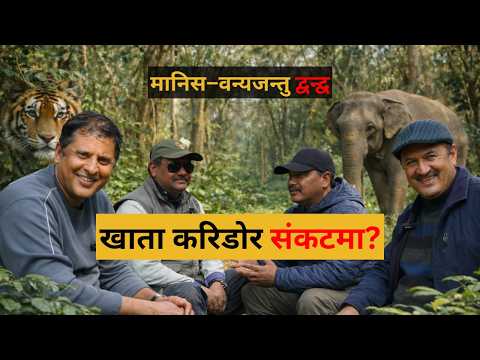
Khata Corridor is a transboundary wildlife corridor linking Nepal’s Bardia National Park with India’s Katarniaghat Wildlife Sanctuary. Once heavily degraded by settlement and over-exploitation, the corridor has been gradually restored through community-led conservation, strong government commitment, and long-term support from partners such as WWF. Today, Khata plays a crucial role in maintaining ecological connectivity for species including tigers, elephants, and leopards. In recent years, rising human–wildlife conflict, including tragic human fatalities, has sparked renewed concern and debate over the future of the corridor. At this critical moment, it is essential to safeguard past conservation achievements while paving a realistic pathway toward harmony between conservation goals and community wellbeing. In this talk episode, the host sits down with three voices deeply rooted in the history and lived reality of the Khata Corridor to unpack its ecological, social, and human dimensions.

Thumbnail for The Untold Story of Human–Monkey Conflict in Nepal: Causes, Impacts, and Future Solutions
In-depth Research42

The Untold Story of Human–Monkey Conflict in Nepal: Causes, Impacts, and Future Solutions

Human–monkey conflict is one of the most serious challenges in Nepal, having escalated to crisis level. It has become a pressing social, economic, and conservation challenge for rural communities across the country. In many rural landscapes, farmers are struggling to protect their crops, livelihoods, and wellbeing as monkey populations increasingly encroach upon human settlements and agricultural lands. In this reflective monologue, host Prakash Kumar Paudel, a conservation biologist, explores the untold story of human–monkey conflict in Nepal — examining its current status, underlying causes, and the profound impacts it is having on rural livelihoods, food security, and landscape management. This episode critically examines: 1. The current status of human–monkey conflict in Nepal and why it is becoming a growing concern in rural regions 2. The severity of the problem, including crop losses, threats to human wellbeing, and the increasing abandonment of agricultural land 3. Existing mitigation measures and why many current responses remain insufficient 4. What is needed to effectively address the problem

Thumbnail for Kathmandu is Sinking (काठमाडौं भासिँदैछ) — Causes and Solutions Explained
Researcher Explainer5.47

Kathmandu is Sinking (काठमाडौं भासिँदैछ) — Causes and Solutions Explained

Kathmandu Valley is facing a growing and serious problem—land subsidence. A recent scientific study using satellite-based data shows that in some areas, the ground is sinking by up to 21 cm per year. This is a serious development challenge rooted in our development and water governance. We need to understand its cause and ways to prevent to protect this historic city. In this video, we break down the research into clear, simple explanations—revealing that this is not just a natural process, but largely driven by human activity. Key drivers include: 1. Excessive groundwater extraction 1. Rapid urbanization 3. Unplanned construction 4. Reduced groundwater recharge --------------------------------------------- Why this matters Many global cities have taken decades—or even centuries—to sink significantly. But in Kathmandu, similar changes are happening within just a few years. Without timely action, the situation could become far more severe. Kathmandu’s land subsidence is not just natural— it is the combined result of water governance failure, poor urban planning, and policy gaps.

Thumbnail for A journey with 100 Gen Z in Nepal: Dream, Frustration & Future | १०० जेन जेड : सपना, संघर्ष, भविष्य
Documentary46.23

A journey with 100 Gen Z in Nepal: Dream, Frustration & Future | १०० जेन जेड : सपना, संघर्ष, भविष्य

Guest / speaker: 100 Gen Z

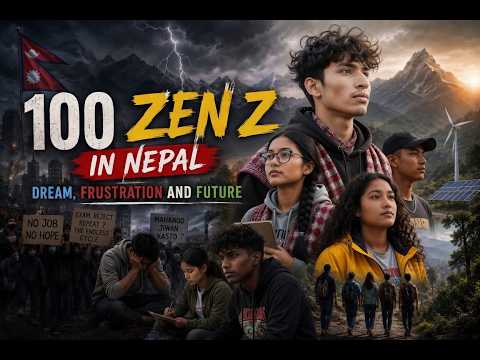
Gen Z is now one of the most discussed generations in Nepal. Whether in politics, social media, education, employment, technology, or environmental awareness — the voice of Gen Z is increasingly shaping the country’s social conversation. They have been instrumental in bringing a "political revolution in Nepal". In this reflective documentary, Himavat Sambaad explores the untold reality of Gen Z in Nepal through interviews with 100 Gen Z respondents from across Nepal, examining how today’s young generation sees their future, their country, and the growing challenges around them. The documentary critically examines: 1. The daily life challenges and frustrations faced by Gen Z in today’s social and economic landscape 2. Luxuries and experiences young people are sacrificing because of rising inflation and financial pressure 3. Childhood dreams, changing ambitions, and how reality has reshaped future expectations 4. The influence of social media — including the most used platforms and perceptions about digital relationships and online connections 5. Serious social and environmental issues that concern Gen Z the most 6. Everyday environmental challenges and the changing environmental conditions in their hometowns 7. Their fears, uncertainties, and hopes about the future of Nepal and the next generation